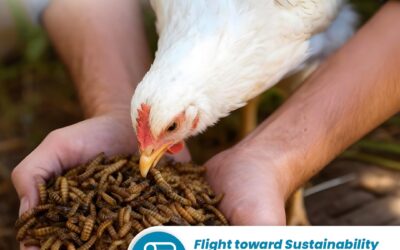
Fermented Banana Feed & Banana-Derived Nanoparticles: A Sustainable Breakthrough for Poultry Nutrition


As global poultry production grows, feed costs continue to dominate operational expenses—often contributing 60–70% of the total cost. This challenge has pushed nutritionists and producers to explore alternative, sustainable, and cheaper feed resources. A recent comprehensive review in Poultry Science highlights an innovative solution: fermented banana feed and banana-derived nanoparticles as promising tools for future poultry production.
Why Banana By-Products Matter
Bananas are one of the most widely grown fruits globally, generating large quantities of by-products—peels, stems, leaves, and rejected fruits. These materials are rich in:
- Carbohydrates & energy
- Dietary fiber
- Vitamins B6, C, E
- Minerals like potassium & magnesium
- Polyphenols and antioxidants
However, raw banana waste also contains anti-nutritional factors like tannins and phytates. This is where fermentation plays a transformational role.
How Fermentation Improves Banana Feed
Fermentation (ensiling, solid-state fermentation, or EM-based fermentation) significantly upgrades the nutritional quality of banana residues.
Benefits of Fermented Banana Feed
✔ Higher crude protein due to microbial biomass
✔ Lower anti-nutritional factors
✔ Improved digestibility
✔ Production of organic acids that support gut health
✔ Enhanced shelf life due to reduced pH
✔ Better palatability and feed intake
Broiler trials show improved feed conversion and growth performance when fermented banana leaves or peels are added at safe inclusion levels.
 Safe Inclusion Levels for Poultry
Research summarized in the review suggests:
- Broilers:
5–10% fermented banana products improve weight gain and FCR.
Levels above 20–30% may reduce performance due to fiber/tannins. - Layers:
3–6% improves egg weight, yolk color, and nutritional profile. - Other species:
Ruminants and certain fish also benefit from banana by-product inclusion.
Impact on Meat and Egg Quality
Several studies reported:
- Improved carcass yield and meat lightness
- Better fatty-acid profiles due to increased antioxidants
- Enhanced yolk pigmentation from natural carotenoids in banana tissues
These improvements can contribute to consumer appeal and product value.
Banana-Derived Silver Nanoparticles (AgNPs) — The Next Frontier
One of the most exciting insights from the review is the use of banana extracts to produce silver nanoparticles through green synthesis.
Why Nanoparticles?
Banana extracts contain polyphenols and pectin that act as natural reducing agents, enabling eco-friendly production of nanoparticles. These AgNPs exhibit:
- Strong antibacterial properties
- Promising antioxidant activity
- Potential as growth-promoting feed additives
But Caution is Necessary
Despite the promise, the review emphasizes:
- Need for safety evaluation
- Potential concerns of residue accumulation
- Lack of regulatory approval
- Unknown environmental impact
Thus, nanoparticles should not be used in commercial poultry feeds until validated through rigorous long-term studies.
Practical Recommendations for Poultry Farmers
Based on the insights from the review:
✔ Start with 5–10% fermented banana inclusion
This improves performance without compromising feed intake.
✔ Ensure fermentation is properly controlled
Use EM, molasses, or solid-state methods for 14–21 days.
Monitor pH (<4.5), smell, and moisture.
✔ Avoid high inclusion (>20%) unless the diet is reformulated
Fiber and tannins can reduce efficiency.
✔ Nanoparticles — research only, not commercial
Promising but unapproved for field use.
 Conclusion
The integration of fermented banana feed into poultry diets presents an exciting, sustainable opportunity—especially for banana-growing regions. Fermentation enhances nutritional quality, increases digestibility, supports better gut health, and can improve meat and egg characteristics. At safe inclusion levels, it can effectively reduce feed costs without sacrificing performance.
Meanwhile, banana-derived nanoparticles represent an innovative future direction, offering antimicrobial and antioxidant potential. However, the poultry industry must approach this area cautiously until comprehensive safety and regulatory assessments are completed.
As feed prices rise and sustainability becomes essential, banana by-products—when processed intelligently—could become a valuable component of next-generation poultry nutrition.
References
- Saeed M., Hassan F., Al-Khalaifah H., et al. (2025). Fermented banana feed and nanoparticles: a new eco-friendly, cost-effective potential green approach for poultry industry. Poultry Science 104:105171.