Smart Poultry Farming: How Technology is Revolutionizing the Coop
The global demand for meat and eggs is skyrocketing. At the same time, producers face strict regulations on animal welfare and immense pressure to be sustainable. How can the industry balance these competing demands?
The answer lies in a digital transformation. Smart poultry farming—the integration of advanced digital tools into meat and egg production—is reshaping how farmers operate. By moving from manual guesswork to automated, data-driven decisions, the industry is redefining what it means to be efficient.
Here is a look at the top trends and innovations driving this change, based on recent scientific research.
The “Big Five” Technologies in the Coop
Recent studies identify five core pillars that make up the modern smart farm. These technologies work together to monitor, analyze, and optimize every stage of production.
1. The Internet of Things (IoT)
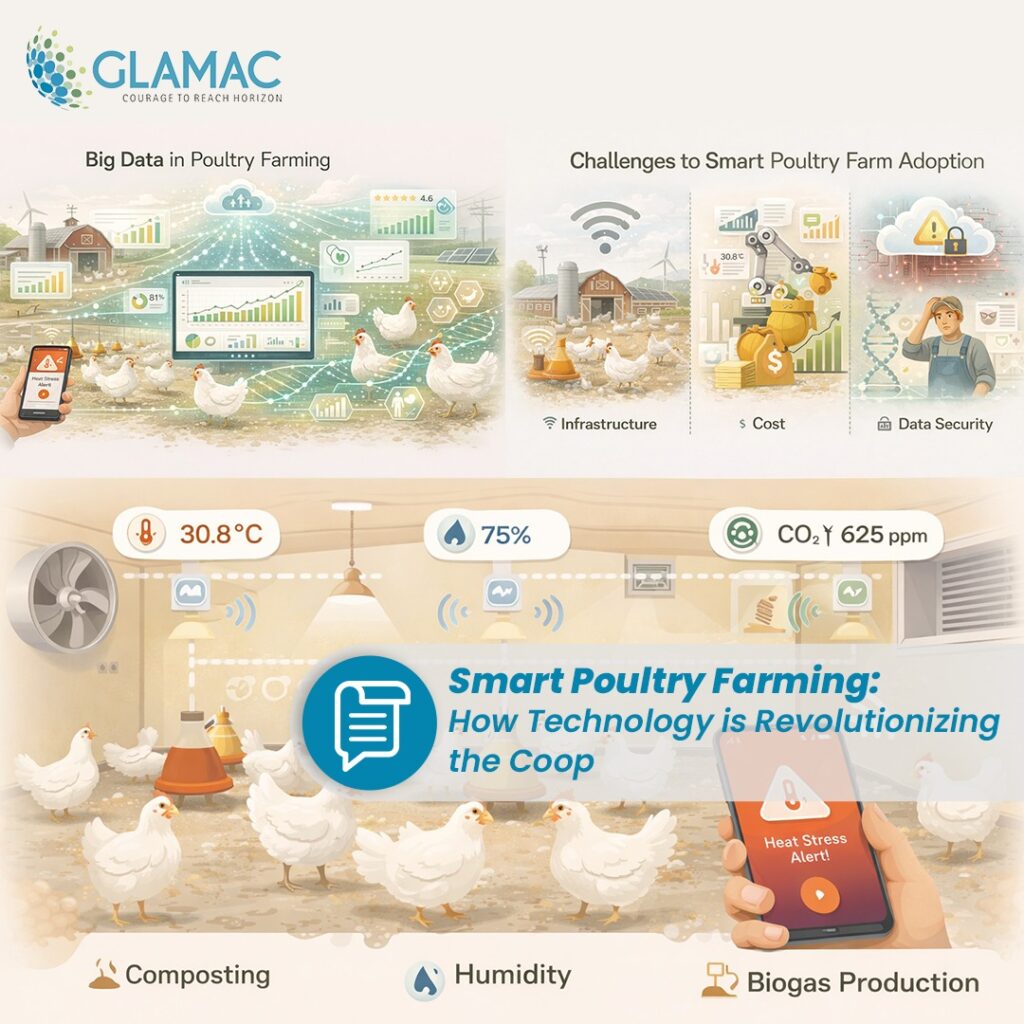
Think of IoT as the eyes and ears of the farm. It connects devices via the internet to collect data in real-time. Sensors placed in poultry houses monitor critical environmental factors like temperature, humidity, and air quality.
If a sensor detects a rise in heat that could stress the birds, it sends an instant alert. This allows for immediate adjustments, reducing mortality and ensuring better animal comfort.
2. Artificial Intelligence (AI) and Machine Learning
If IoT provides the data, AI provides the brainpower. AI systems analyze the vast amounts of information collected by sensors to recognize patterns that humans might miss.
Machine learning algorithms can predict health issues before they become outbreaks or optimize feeding schedules to prevent waste. This shift from reactive to proactive management is a game-changer for productivity.
3. Big Data and Analytics
Poultry farms generate massive amounts of data daily. Big Data technologies capture and store this information, allowing producers to look at long-term trends. Advanced analytics can even help in the genetic selection of birds, ensuring future flocks are healthier and more productive.
4. Cloud Computing
Where does all this data go? Cloud computing offers a scalable solution. It allows farmers to access powerful processing tools and intuitive dashboards over the internet, without needing expensive on-site servers.
5. Automation and Robotics
Robots are stepping in to handle repetitive and labor-intensive tasks. From cleaning coops to collecting eggs and even monitoring bird behavior, robotics reduce the reliance on manual labor and improve safety for workers.
Global Trends: Asia Takes the Lead
Research into these technologies has exploded since 2020, growing by an average of 60% year-over-year. Interestingly, the innovation isn’t just coming from the West.
Recent bibliometric analysis reveals that Asia is a dominant force, producing about 51% of global scientific research on smart poultry technologies. Countries like China and India, alongside the US, UK, and Brazil, are currently leading the charge in developing these solutions.
Challenges to Adoption
Despite the clear benefits, the road to a fully “smart” farm isn’t without obstacles.
- Infrastructure: Many farms are located in rural areas where internet connectivity is poor. Without reliable connection, IoT and Cloud systems cannot function effectively.
- Cost: The initial investment for sensors, robots, and software is high. This creates a barrier for small-scale producers who might struggle to afford the upgrade.
- Data Security: As farms become more connected, they also become vulnerable to cyberattacks, which could compromise sensitive operational data.
Key Insights
- Welfare First: The strongest trend in current research is using technology specifically to improve animal welfare through environmental monitoring.
- Interdisciplinary Growth: The field is blending computer vision, deep learning, and agriculture, proving that the future farmer needs to be part tech-expert.
- Growth Trajectory: Research interest has surged since 2020, indicating that these technologies are moving from experimental phases to mainstream adoption.
Conclusion
Smart poultry farming is no longer a futuristic concept; it is an essential evolution for an industry striving for sustainability and scalability. While challenges like cost and rural connectivity remain, the potential to improve animal welfare and production efficiency is undeniable.
As research continues to grow—particularly in Asian markets—we can expect more accessible and adaptive solutions to reach farmers soon. The future of poultry is connected, automated, and data-driven.
References
- Primary Source: Thomas, L. C. S., et al. (2025). Smart Technologies in Poultry Production: Trends and Innovations. Procedia Computer Science, 270, 4451–4460.
External Context: For broader context on global agricultural trends, readers may consult the Food and Agriculture Organization (FAO) or recent reports from Wageningen University & Research.