Beyond Antibodies: Why Strengthening Mucosal Immunity Matters in Poultry
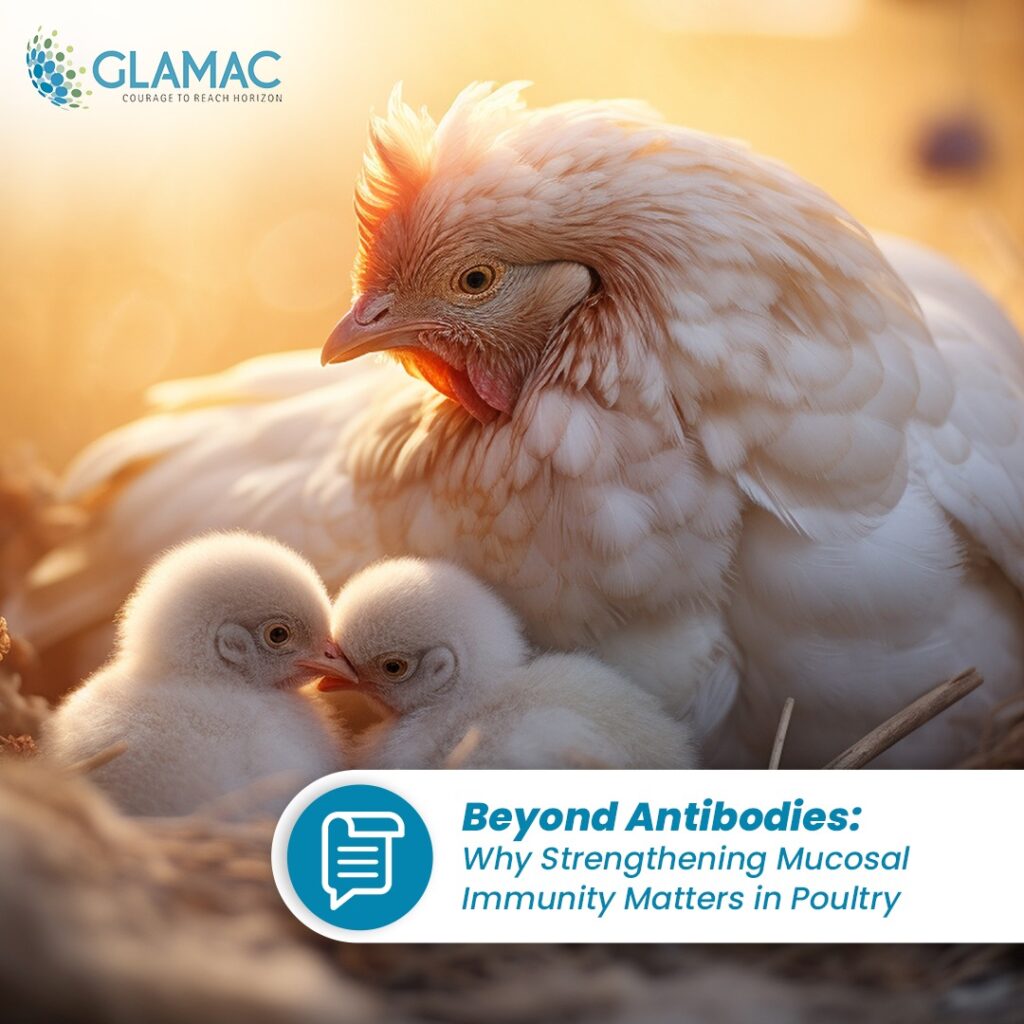
Did you know? Most poultry diseases begin right at the bird’s entry points – the nose, mouth, and gut lining. These areas are covered by a thin protective shield called mucosal immunity
When you think about boosting immunity, the first thing that probably comes to mind is vaccination, right? And you’re not wrong — vaccines are vital because they help build antibodies in the blood, protecting birds by stopping diseases from spreading inside the body.
But what if germs could be stopped before they even enter? That’s the role of mucosal immunity — the bird’s first line of defence at the nose, gut, and respiratory tract.
In this article, we’ll explore the difference between mucosal immunity and antibody-mediated immunity, why both matters, and how modern poultry programs use them together for stronger protection.
- What is Immunity?
Immunity is the bird’s natural ability to resist or fight infections caused by viruses, bacteria, fungi, or parasites. While the immune system is complex, it can be broadly divided into innate and adaptive immunity, which work together to keep flocks healthy and protected.
- Innate Immunity (Natural, Non-Specific Defence)
This is an immediate defence present from birth. It reacts quickly but does not target specific pathogens.
Key components in poultry:
- Physical and chemical barriers: skin, mucous membranes, low pH in the gut, enzymes.
- Cellular defence: heterophils, macrophages, natural killer (NK) cells.
- Soluble factors: complement system, cytokines, antimicrobial peptides.
- Adaptive Immunity (Acquired, Specific defence)
This develops after infection or vaccination and is specific to the pathogen. It also provides immunological memory, meaning the bird responds faster and stronger upon re-exposure.
Adaptive immunity has two major arms:
- a) Humoral (Antibody-Mediated) Immunity
- Mediated by B-cells, producing antibodies like:
- IgM – first responder
- IgY – main circulating antibody (similar to IgG in mammals)
- IgA – present in blood and mucosal secretions
- Protects against pathogens in the blood and tissues
- Example: Inactivated NDV or IBD vaccines
- b) Cell-Mediated Immunity (CMI)
- Mediated by T-cells:
- Helper T-cells (CD4+) regulate immune responses
- Cytotoxic T-cells (CD8+) destroy infected cells
- Critical for defense against intracellular pathogens like viruses
- Example: Response against Marek’s disease virus
- Mucosal Immunity (Specialized Local Defence)
Mucosal immunity acts like a frontline guard at the bird’s airways, intestines, and reproductive tract – exactly where most pathogens first attack.
- Key antibody: Secretory IgA (sIgA).
- Found in tears, saliva, intestinal secretions, and respiratory mucus.
- Prevents pathogens from attaching and colonizing mucosal surfaces.
- Example:VAP, Live spray vaccines for NDV and IBV stimulates mucosal immunity.
Enhancing Mucosal Immunity
While most vaccination programs focus on antibodies in the blood, mucosal immunity often gets overlooked. Yet it is the bird’s first line of defence, especially against enveloped viruses that enter through the respiratory or digestive tract. Strengthening this barrier means we can trap pathogens before they even enter the bird’s system, reducing infection risk and disease spread.
Role of VAP In enhancing Mucosal Immunity
VAP (Versatile Adhesion Polypeptides) is a natural non-toxic functional feed additive could assist in strengthening the mucosal immunity to target environmental viruses (Specially Enveloped) making it poultry less susceptible to viral infections.
Over the years of clinical usage VAP has been observed to prevent viral infection mainly by:
- Better Growth → Higher body weight gain, improved feed conversion, and greater production efficiency.
- Smarter Immunity → Instead of over-producing serum antibodies, VAP improves immune activity toward the mucosa (gut and trachea).
- Upregulated Defence → sIgA and MUC-2 expression increased, strengthening frontline barriers.
- Efficient Protection → Early exclusion of viruses and antigens reduced systemic stress, helping birds maintain growth while staying protected.
- Practical Relevance → This dual benefit is valuable in commercial production, especially where antibiotic use is restricted.